What Credit Score Do You Need to Buy a House?
- Roy Sims
- Jul 17
- 12 min read

You do not need a perfect credit score to buy a house.
Your credit score can affect whether you qualify for a mortgage, which loan programs may be available, the interest rate you receive, and how much the loan ultimately costs. However, there is no single credit score that guarantees approval for every borrower.
Mortgage lenders also review your income, employment, debt, down payment, savings, credit history, and the property being purchased.
What Credit Score Is Needed to Buy a House?
The score needed depends on the mortgage program and the lender.
As a general planning guide:
Mortgage type | General credit-score guidance |
Conventional loan | Many lenders look for approximately 620 or higher, but requirements vary |
FHA loan | FHA rules may allow scores of 580 or higher with maximum financing |
FHA loan with larger down payment | Scores from 500 through 579 may be eligible with at least 10% down |
VA loan | VA does not establish one universal minimum score; lenders set their own requirements |
USDA guaranteed loan | USDA does not publish one universal minimum score; lenders still evaluate creditworthiness |
These are general program guidelines, not promises of approval. A lender may require a higher score than the minimum permitted by a government-backed program.
Why There Is No Universal Minimum Credit Score
Mortgage approval involves more than one number.
Two applicants with the same credit score may receive different results because they have different:
Income
Employment histories
Monthly debts
Down payments
Cash reserves
Credit-card balances
Late-payment histories
Loan amounts
Property types
Mortgage programs
A strong application in one area may help offset a weakness in another area, but every lender and program applies its own underwriting standards.
What Is a Credit Score?
A credit score is a number calculated from information in your credit reports.
Most commonly used consumer credit scores fall between 300 and 850. A higher score generally indicates a stronger history of managing borrowed money.
Your score may be influenced by:
Payment history
Amounts owed
Credit utilization
Length of credit history
Types of credit accounts
New credit applications
Serious negative information
You do not have only one permanent credit score. Scores can differ depending on the scoring model, credit-reporting company, information available, and date calculated.
The score shown by a free consumer application may not be identical to the mortgage score used by a lender.
How Credit Scores Affect Mortgage Approval
A higher credit score may make it easier to:
Qualify for a mortgage
Receive a lower interest rate
Compare offers from more lenders
Reduce certain risk-based charges
Qualify with a smaller down payment
Receive more favorable loan terms
A lower score does not automatically prevent homeownership, but it may:
Reduce the number of available lenders
Increase the interest rate
Increase the required down payment
Increase mortgage-insurance costs
Require additional documentation
Lead to stricter underwriting
Increase the total cost of borrowing
The score is important, but lenders also examine the complete credit report and financial application.
Conventional Mortgage Credit Scores
Conventional mortgages are not directly insured by FHA, VA, or USDA.
Many conventional lenders commonly look for a credit score around 620 or higher. However, there is no single score that applies to every conventional loan.
Approval may depend on:
Automated underwriting results
Down payment
Loan-to-value ratio
Debt-to-income ratio
Income stability
Cash reserves
Property type
Number of borrowers
Lender requirements
A score that meets a basic threshold does not guarantee approval or the best available rate.
Borrowers with stronger scores may receive more favorable pricing, while borrowers with lower scores may face higher rates or additional charges.
FHA Loan Credit Scores
FHA loans are mortgages issued by approved lenders and insured by the Federal Housing Administration.
Under FHA program rules:
A qualifying score of 580 or higher may permit financing of up to 96.5% of the purchase price.
A qualifying score from 500 through 579 is generally limited to 90% financing, requiring at least 10% down.
A score below 500 is generally not eligible for FHA-insured financing.
These are FHA program limits. Individual lenders may require higher scores.
A borrower may therefore meet FHA’s basic score requirement but still be declined by a particular lender.
FHA approval also depends on income, debt, payment history, property standards, documentation, and other underwriting requirements.
VA Loan Credit Scores
VA loans are available to eligible veterans, service members, and certain surviving spouses.
The Department of Veterans Affairs does not set one universal minimum credit score for every VA loan.
Private lenders evaluate the borrower’s credit history and may establish their own score requirements.
VA underwriting may also consider:
Income
Employment
Monthly obligations
Residual income
Payment history
Ability to repay
Property eligibility
VA entitlement
A borrower should compare more than one VA-approved lender because lender requirements can differ.
USDA Loan Credit Scores
USDA guaranteed home loans may help eligible borrowers purchase homes in qualifying rural areas.
USDA does not publish one universal minimum credit score for every guaranteed loan.
Applicants must still demonstrate a willingness and ability to manage and repay debt. Individual lenders may use their own score requirements or automated underwriting standards.
USDA eligibility also depends on:
Household income
Property location
Occupancy
Repayment ability
Credit history
Program rules
Lender approval
A lower score does not automatically make someone ineligible, but it may lead to additional review or documentation.
What If Your Credit Score Is Around 600?
A score around 600 may still provide possible paths to homeownership.
Potential options may include:
FHA financing
VA financing for eligible borrowers
USDA financing for eligible properties and households
Specialized lender programs
Manual underwriting in certain circumstances
However, a lower score may result in:
Fewer lender choices
Higher interest rates
A larger down-payment requirement
Higher mortgage-insurance costs
More documentation
Stricter review of late payments and collections
Improving the score before applying may reduce the monthly payment and total borrowing cost.
What If Your Score Is Below 580?
A score below 580 can make mortgage approval more difficult, but it does not necessarily mean homeownership is impossible forever.
An FHA loan may permit a score between 500 and 579 with at least 10% down under program rules. However, many lenders establish higher internal minimums.
Before applying, consider:
Reviewing all credit reports
Disputing inaccurate information
Paying every account on time
Reducing credit-card balances
Avoiding new unnecessary debt
Saving a larger down payment
Building emergency reserves
Speaking with a HUD-approved housing counselor
Comparing lenders that offer appropriate programs
Avoid paying a company that promises to create a new credit identity or remove accurate negative information immediately.
What Credit Score Gets the Best Mortgage Rate?
There is no single score that guarantees the lowest rate.
In general, borrowers with stronger scores receive access to more competitive mortgage offers. The lowest available rates are often offered to borrowers with scores in the mid-to-high 700s or above, although market conditions and lender pricing vary.
The rate may also depend on:
Down payment
Loan amount
Loan term
Fixed or adjustable rate
Property type
Occupancy
Discount points
Debt-to-income ratio
Loan program
Market conditions
Improving your score may help, but the score is only one part of mortgage pricing.
How a Small Rate Difference Affects the Payment
Consider a hypothetical $300,000 fixed-rate mortgage with a 30-year term.
Example A
Interest rate: 6.50%
Estimated principal-and-interest payment: approximately $1,896 per month
Example B
Interest rate: 7.00%
Estimated principal-and-interest payment: approximately $1,996 per month
The difference is approximately $100 per month, or about $1,200 per year.
Over many years, even a small rate difference can substantially affect total interest.
These examples exclude property taxes, homeowners insurance, mortgage insurance, HOA fees, and other expenses.
Credit Score vs. Credit Report
Your credit score and credit report are related, but they are not the same.
A credit report contains information such as:
Credit accounts
Account balances
Payment history
Credit limits
Collections
Public-record information
Credit inquiries
Personal identifying information
A credit score is calculated using information from a credit report.
Mortgage lenders review both. A score may summarize risk, but the report shows the details behind the number.
An applicant may have a qualifying score and still face concerns because of:
Recent late payments
Unpaid collections
High balances
Recent new debt
Foreclosure
Bankruptcy
Disputed accounts
Limited credit history
Reviewing the report before applying gives you time to identify possible problems.
Check Your Credit Before Applying
Review your credit reports well before shopping for a mortgage.
Look for:
Accounts that do not belong to you
Incorrect late payments
Wrong balances
Duplicate collections
Old debts reported incorrectly
Incorrect personal information
Accounts affected by identity theft
Dispute inaccurate information with the company that provided it and the appropriate credit-reporting agency.
Credit-report corrections can take time, so starting several months before applying is better than waiting until closing.
How to Improve Your Credit Before Buying
Credit improvement normally requires consistent financial behavior rather than one quick trick.
Pay every bill on time
Payment history is an important part of many scoring models.
Set reminders or automatic payments to reduce the risk of missing due dates.
Reduce credit-card balances
High balances compared with credit limits may lower scores.
Paying balances down can improve credit utilization and reduce monthly obligations.
Avoid closing older accounts without a reason
Closing an account may reduce available credit and affect utilization.
Consider the account’s fees, age, and effect on your overall credit profile before closing it.
Limit unnecessary new applications
Opening several new accounts before applying for a mortgage can create additional inquiries and monthly obligations.
Avoid financing large purchases
A new vehicle loan, furniture account, or personal loan may increase your debt-to-income ratio and reduce mortgage affordability.
Keep cash available
Do not use every available dollar to pay debt if doing so leaves no funds for the down payment, closing costs, repairs, or emergencies.
Correct credit-report errors
Removing inaccurate negative information may improve the report and possibly the associated score.
Accurate negative information generally cannot be removed simply because it is inconvenient.
Credit Utilization and Mortgage Preparation
Credit utilization compares credit-card balances with credit limits.
For example, a $4,000 balance on a card with a $10,000 limit represents 40% utilization.
Lower balances may help improve the credit profile.
Utilization can be reviewed:
For each individual card
Across all revolving accounts combined
Paying before the statement balance is reported may reduce the balance appearing on a credit report, but reporting dates vary by issuer.
Do not miss essential payments or empty emergency savings solely to reduce utilization.
Debt-to-Income Ratio Still Matters
A strong credit score does not guarantee mortgage approval when monthly debts are too high.
Debt-to-income ratio compares qualifying monthly debt payments with gross monthly income.
Lenders may include:
Proposed housing payment
Credit-card minimum payments
Auto loans
Student loans
Personal loans
Other recurring obligations
Paying down debt may help in two ways:
It may improve the credit profile.
It may reduce the debt-to-income ratio.
The exact ratio permitted depends on the loan program, lender, automated underwriting result, and other factors.
Down Payment and Cash Reserves
A larger down payment may reduce the loan amount and improve the overall application.
It may also:
Lower the monthly payment
Reduce total interest
Reduce mortgage-insurance costs
Improve the loan-to-value ratio
Provide more lender options
However, using all available savings for the down payment can create financial risk.
Keep enough money available for:
Closing costs
Moving
Repairs
Insurance deductibles
Maintenance
Income interruptions
Emergencies
The best down payment is not necessarily the largest possible amount.
Can You Buy a House With No Credit Score?
Having no traditional credit score is different from having a low score.
Some borrowers have limited or no reported credit because they use little traditional debt.
Certain mortgage programs and lenders may consider alternative payment history, such as:
Rent
Utilities
Insurance
Phone service
Other recurring obligations
Alternative-credit underwriting is not available in every situation, and documentation requirements can be extensive.
Speak with lenders experienced in manual or nontraditional credit underwriting.
How Joint Applications Are Evaluated
When two people apply together, the lender evaluates information from both borrowers.
A weaker credit profile may affect:
Qualification
Interest rate
Available loan programs
Required documentation
Mortgage pricing
Using only one borrower may improve the credit portion of the application, but it may also reduce qualifying income.
A lender can compare both structures and explain how each affects approval and pricing.
Does Mortgage Rate Shopping Hurt Your Credit?
A mortgage lender generally performs a hard credit inquiry when you formally apply.
One inquiry may have a small effect on a credit score.
Credit-scoring systems generally recognize that borrowers compare mortgage offers. Multiple mortgage inquiries made within a reasonably short shopping period are commonly grouped for scoring purposes rather than treated as completely separate borrowing events.
Complete your rate shopping within a focused period and compare official Loan Estimates.
Do not avoid comparing lenders solely because you are concerned about one additional mortgage inquiry.
What Not to Do Before Closing
Mortgage lenders may review your credit again before closing.
Avoid making major financial changes without first speaking with the lender.
Do not:
Open new credit cards
Finance a vehicle
Take out a personal loan
Make large credit purchases
Co-sign a loan
Miss payments
Close major accounts unexpectedly
Change jobs without discussing it
Move large unexplained deposits between accounts
A change after preapproval can affect the debt-to-income ratio, available cash, credit score, or final approval.
Prequalification vs. Preapproval
A prequalification is generally an early estimate based on information you provide.
A preapproval usually involves a more detailed review of income, assets, debts, and credit.
Neither one guarantees final approval.
The lender must still verify:
Financial documents
Employment
Property value
Title
Insurance
Loan-program requirements
Final credit information
Use preapproval to guide the home search, but keep the payment within your personal comfort level.
Use CalcuCenter to Plan Your Home Purchase
Use the Mortgage Affordability Calculator to estimate how your income, debts, down payment, rate, taxes, insurance, mortgage insurance, and HOA fees may affect the home price that fits your budget.
Use the Mortgage Amortization Calculator to compare monthly payments, principal, interest, and payoff schedules.
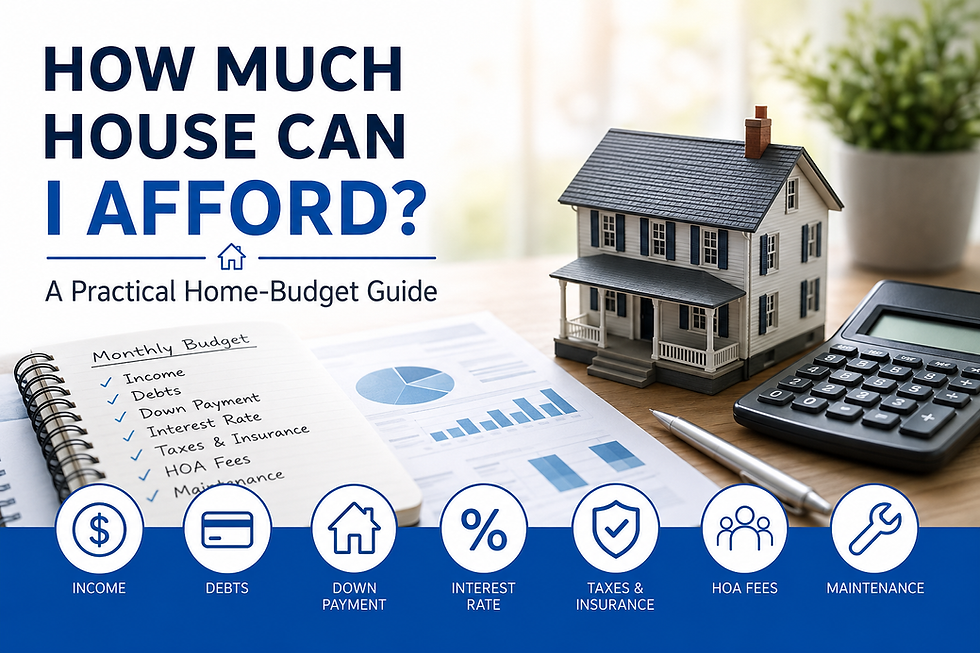
You can also read How Much House Can I Afford? A Practical Home-Budget Guide for help creating a complete housing budget.
For renovation financing, use the FHA 203(k) Renovation Loan Calculator to estimate purchase and renovation scenarios.
Calculator results are planning estimates. A lender must review your complete application before issuing a final approval.
Questions to Ask a Mortgage Lender
Ask each lender:
Which credit score model do you use?
What is the minimum score for this program?
Do you have requirements above the program minimum?
How does my score affect the interest rate?
How does my score affect mortgage insurance?
Would a larger down payment improve the offer?
Are there fees related to my credit profile?
What steps could improve my application?
When will you check my credit again?
What should I avoid doing before closing?
Can you provide an official Loan Estimate?
Compare several lenders using the same loan amount, term, and down payment.
Frequently Asked Questions
What credit score do you need to buy a house?
There is no single score for every mortgage. Many conventional lenders commonly look for approximately 620 or higher. FHA, VA, USDA, and specialized programs may use different standards.
Can I buy a house with a 580 credit score?
Possibly. FHA rules may allow maximum financing with a qualifying score of 580 or higher. The lender may require a higher score and must approve the complete application.
Can I buy a house with a 500 credit score?
FHA rules may allow scores from 500 through 579 with at least 10% down. In practice, finding a lender that accepts a score in that range may be difficult.
What score is needed for a conventional mortgage?
Many lenders commonly look for approximately 620 or higher, but automated underwriting, down payment, debt, property type, and lender rules can affect eligibility.
Does VA require a minimum score?
The Department of Veterans Affairs does not establish one universal minimum score. VA-approved lenders evaluate creditworthiness and may set their own requirements.
Does USDA require a minimum score?
USDA does not publish one universal minimum score for every guaranteed mortgage. Lenders still review credit history and repayment ability.
Will a higher score lower my mortgage payment?
A higher score may help you qualify for a lower rate. A lower rate generally reduces the principal-and-interest payment when the loan amount and term remain unchanged.
Can I qualify with a good score but high debt?
Possibly not. Lenders also evaluate your debt-to-income ratio, income, employment, assets, down payment, and complete credit report.
How long does credit improvement take?
It depends on the reason for the score, reporting dates, account history, and actions taken. Some balance-related changes may appear relatively quickly, while late payments and serious negative information may affect the report much longer.
Should I pay off every debt before applying?
Not automatically. Paying debt may help, but using all savings can leave insufficient money for the down payment, closing costs, and emergencies. Ask a lender which debts most affect qualification.
Should I close paid-off credit cards?
Closing an account may reduce available credit and affect utilization. Consider the account’s fees, age, and effect on your credit profile before closing it.
Is the score from a free app the same score a mortgage lender uses?
Not necessarily. Mortgage lenders may use different scoring models and data than consumer applications.
Can mortgage shopping lower my credit score?
A formal application normally creates a hard inquiry with a small potential effect. Multiple mortgage inquiries within a focused shopping period are generally treated as rate shopping by scoring models.
Can my credit change after preapproval?
Yes. New debt, missed payments, higher balances, new inquiries, or changes in your credit report may affect final approval.
Build a Strong Complete Application
Your credit score is important, but it is not the only part of mortgage approval.
A strong application combines:
Reliable income
Manageable monthly debt
Consistent payment history
A realistic down payment
Emergency savings
Accurate documentation
A home price that fits your budget
Review your credit early, correct errors, reduce unnecessary debt, avoid major financial changes, and compare offers from several lenders.
The goal is not merely to reach a minimum score. The goal is to qualify for a mortgage payment and total housing cost you can sustain comfortably.
This article is for general educational and planning purposes. It is not financial, lending, legal, tax, or credit-repair advice. Credit-score models, mortgage requirements, interest rates, and lender standards can change and vary by borrower.