Rent vs. Buy a Home: Which Is Better?

Deciding whether to rent or buy a home involves much more than comparing monthly rent with a mortgage payment.
The better option depends on your income, savings, debts, local housing costs, expected time in the home, mortgage rate, maintenance costs, lifestyle, and need for flexibility.
Buying may help you build equity and provide greater control over your living space. Renting may require less money upfront and make it easier to move. Neither choice is automatically better for everyone.
Renting vs. Buying at a Glance
Factor | Renting | Buying |
Upfront cost | Usually lower | Usually higher |
Monthly cost | Rent and renter-related expenses | Mortgage and ownership expenses |
Maintenance | Often handled by the landlord | Usually the homeowner’s responsibility |
Flexibility | Generally easier to move | Selling can take time and cost money |
Equity | Normally none | May increase as principal is repaid |
Property-value risk | Mostly borne by the owner | Borne by the homeowner |
Customization | Often limited | Usually more control |
Transaction costs | Usually lower | Closing and selling costs may be substantial |
Payment stability | Rent can increase | Fixed principal and interest can remain stable |
The result depends heavily on how long you stay and what happens to rent, home prices, maintenance costs, and mortgage rates.
What Does It Cost to Rent?
Monthly rent is the largest rental expense, but it may not be the only cost.
Renters may also pay:
Security deposits
Application fees
Renter’s insurance
Pet fees
Parking fees
Utility charges
Amenity fees
Moving expenses
Lease-renewal increases
Some expenses may be refundable, while others are not.
One major advantage of renting is that the landlord generally remains responsible for major covered repairs and property ownership expenses. Renting may also make it easier to move for work, family, education, or lifestyle reasons.
However, rent may increase when the lease is renewed, and rental payments normally do not create ownership equity.
What Does It Cost to Buy a Home?
The cost of buying includes much more than the advertised mortgage payment.
A homeowner’s monthly expenses may include:
Mortgage principal
Mortgage interest
Property taxes
Homeowners insurance
Mortgage insurance
HOA or condominium fees
Utilities
Maintenance
Repairs
Landscaping
Pest control
Local assessments
Homebuyers also need money for upfront expenses, which may include:
Down payment
Loan fees
Home inspection
Appraisal
Title services
Recording charges
Prepaid taxes
Prepaid insurance
Discount points
Moving expenses
Immediate repairs
A mortgage may appear cheaper than rent until all ownership expenses are included.
Compare Rent With the Complete Housing Cost
A common mistake is comparing monthly rent with only a mortgage’s principal-and-interest payment.
A better comparison includes the complete cost of each option.
Complete monthly renting cost
Rent
Renter’s insurance
Required monthly fees
Parking
Pet fees
Utilities not included in rent
Complete monthly ownership cost
Principal and interest
Property taxes
Homeowners insurance
Mortgage insurance
HOA fees
Maintenance allowance
Utilities
Other property expenses
The ownership cost may change even when the mortgage has a fixed rate because taxes, insurance, HOA fees, utilities, and repairs can increase.
What Is Home Equity?
Home equity is the portion of the property’s value that is not owed to a lender.
It can be estimated as:
Current home value − mortgage balance = estimated equity
Equity may increase when:
You make a down payment
You repay mortgage principal
The property increases in value
Improvements increase the property’s value
Equity may decrease when:
Property values fall
You borrow against the home
The home requires expensive repairs
Selling costs reduce the amount you receive
You refinance and increase the balance
Equity is not the same as cash in a checking or savings account. Accessing it may require selling the home or taking another loan secured by the property.
Is Renting Throwing Money Away?
No. Rent pays for housing, flexibility, and freedom from many ownership responsibilities.
Homeowners also pay expenses that do not directly create equity, including:
Mortgage interest
Property taxes
Insurance
Mortgage insurance
HOA fees
Maintenance
Repairs
Buying and selling costs
Only the portion of the mortgage payment applied to principal directly reduces the loan balance.
Both renters and homeowners pay for housing. The more useful question is which arrangement best fits your finances, plans, and preferred lifestyle.
How Long Do You Expect to Stay?
Your expected time in the home is one of the most important parts of the decision.
Buying often involves significant upfront costs. Selling can create another group of costs.
A longer ownership period gives you more time to:
Spread transaction costs across several years
Repay mortgage principal
Recover from temporary price declines
Benefit from possible appreciation
Build equity
A shorter stay increases the possibility that closing costs, selling expenses, and early mortgage interest will outweigh the equity gained.
Renting may be more practical when you expect to move within a relatively short period.
What Is the Rent-vs.-Buy Break-Even Point?
The break-even point is the approximate time when the financial benefits of buying catch up with the costs of renting.
A useful comparison may include:
Down payment
Closing costs
Mortgage payments
Property taxes
Insurance
Mortgage insurance
HOA fees
Maintenance
Rent increases
Home-value changes
Selling expenses
Remaining mortgage balance
Possible investment return on money not used to buy
The break-even point is only an estimate because future costs and property values cannot be predicted with certainty.
A Simple Rent-vs.-Buy Example
Suppose you are comparing these options.
Renting
Monthly rent: $2,000
Renter’s insurance: $25
Required parking or fees: $100
The starting monthly rental cost would be approximately:
$2,125
Buying
Home price: $300,000
Down payment: $30,000
Mortgage amount: $270,000
Mortgage principal and interest: $1,707
Property taxes: $300
Homeowners insurance: $150
Mortgage insurance: $120
Maintenance allowance: $250
The estimated starting ownership cost would be approximately:
$2,527 per month
This example does not prove that renting is better. Part of the mortgage payment reduces principal, and the home may change in value.
It does show why comparing rent with only principal and interest can create a misleading result.
How the Down Payment Affects the Decision
A larger down payment generally reduces:
Mortgage amount
Monthly principal and interest
Total interest
Loan-to-value ratio
Possible mortgage-insurance costs
However, using nearly all your savings for the down payment can leave too little money for:
Closing costs
Moving
Repairs
Furniture and appliances
Medical expenses
Job loss
Other emergencies
A strong buying plan considers both the down payment and the money that will remain after closing.
Maintenance and Repair Costs
Renters usually contact the landlord or property manager when a covered repair is needed.
Homeowners generally pay for repairs themselves.
Possible expenses include:
Roof replacement
Heating and cooling systems
Plumbing
Electrical work
Appliances
Water damage
Foundation problems
Painting
Landscaping
Pest control
Maintenance costs are not evenly distributed. A homeowner may have several inexpensive months followed by a major repair.
A rent-vs.-buy comparison should include a maintenance allowance, but the actual cost may be higher or lower.
Property Taxes, Insurance, and HOA Fees
Property taxes may change as property assessments and local tax rates change.
Homeowners insurance premiums may also increase based on:
Location
Replacement cost
Claims history
Weather risk
Property condition
Insurer pricing
HOA fees can increase, and some communities may impose special assessments.
These costs can rise even when the mortgage interest rate remains fixed.
Appreciation Is Not Guaranteed
A home may increase in value, remain flat, or decline.
Property values may be affected by:
Local employment
Neighborhood conditions
Mortgage rates
Housing supply
School districts
Property condition
Natural-disaster risk
Local taxes
Buyer demand
Broader economic conditions
Do not assume that a home will increase by the same percentage every year.
A calculator can test different appreciation assumptions, but it cannot predict the future market value of a property.
Renting and Investing the Difference
Renting may leave more money available for saving or investing when the complete cost of ownership is higher.
This approach only creates a financial benefit when the difference is actually saved or invested consistently.
Possible uses include:
Emergency savings
Retirement accounts
Paying down higher-interest debt
Education savings
Other investments
Investment returns are not guaranteed, and market values can fall.
The comparison should consider both the potential benefit and the risk.
Buying and Building Equity
Buying may create equity as principal is repaid.
For a standard amortizing mortgage, early payments typically contain more interest and less principal. Over time, the principal portion usually increases.
Equity growth may come from:
Down payment
Scheduled principal payments
Extra principal payments
Property appreciation
However, selling costs and remaining mortgage debt reduce the amount of equity you receive when the home is sold.
Lifestyle Benefits of Renting
Renting may be attractive when you value:
Flexibility to move
Less responsibility for repairs
Access to amenities
Predictable maintenance responsibilities
Lower upfront costs
Shorter commitments
The ability to test a neighborhood before buying
Renting may also be practical when your job, family situation, or preferred location could change.
Lifestyle Benefits of Buying
Buying may be attractive when you value:
Long-term stability
More control over the property
The ability to renovate or customize
Space for family, hobbies, or pets
Potential equity growth
Protection from lease nonrenewal
A long-term connection to a community
Ownership also creates responsibilities that renters may not have, including repairs, taxes, insurance, maintenance, and selling decisions.
Job and Income Stability
A mortgage is a long-term obligation.
Before buying, consider:
How stable your employment is
Whether your income varies
Whether one income supports the payment
Whether you may relocate
Whether your industry is changing
How much emergency savings you have
Whether another major expense is expected
Renting may provide valuable flexibility when income or location is uncertain.
Emergency Savings
Homeownership can create unpredictable expenses.
Before buying, consider keeping funds available for:
Job loss
Medical expenses
Insurance deductibles
Major repairs
Vehicle replacement
Family emergencies
Temporary income reductions
A home may be affordable on paper but still create financial stress when the purchase uses nearly all available savings.
Mortgage Rates and the Decision
The mortgage rate affects:
Monthly principal and interest
Total interest
The home price that fits the budget
The cost of waiting to buy
The possible benefit of future refinancing
A higher rate increases the payment for the same loan amount.
A lower rate reduces the payment, but it does not remove taxes, insurance, maintenance, or transaction costs.
Do not buy an unaffordable home solely because you expect to refinance later. Future refinancing depends on rates, income, credit, equity, property value, lender requirements, and closing costs.
Tax Considerations
Homeownership may create tax consequences, but the benefit varies.
Possible considerations include:
Mortgage-interest deductions
Property-tax deductions
Standard deduction versus itemizing
Capital gains when the home is sold
Home-office rules
State and local taxes
Not every homeowner receives a meaningful tax benefit.
Tax rules can change and depend on personal circumstances. Do not make a rent-vs.-buy decision based solely on an assumed deduction.
Consult a qualified tax professional for advice about your situation.
Rent Control and Tenant Protections
Rental rules vary by location.
Some areas may regulate rent increases, security deposits, notices, habitability standards, or eviction procedures. Other areas provide fewer restrictions.
Review:
The lease
Renewal terms
Utility responsibilities
Pet policies
Maintenance responsibilities
Local tenant rules
Early-termination provisions
This article provides general planning information and does not replace local legal guidance.
The Risk of Becoming House-Poor
Being house-poor means that housing expenses consume so much of the budget that little remains for other needs.
Warning signs may include:
Little emergency savings
Difficulty contributing to retirement
Reliance on credit cards for repairs
Inability to manage rising taxes or insurance
No room for medical or family expenses
Constant concern about the next payment
Buying a less expensive home may provide more financial stability than purchasing the maximum amount a lender will approve.
When Renting May Be the Better Choice
Renting may be a stronger option when:
You expect to move soon.
Your employment or income is uncertain.
You have limited savings.
You are rebuilding credit.
Local home prices are high compared with rent.
You do not want maintenance responsibilities.
You need flexibility.
You are unfamiliar with the area.
Buying would prevent adequate emergency savings.
The complete ownership payment would strain your budget.
Renting can be a practical financial choice rather than a failure to buy.
When Buying May Be the Better Choice
Buying may be a stronger option when:
You expect to remain in the area for several years.
Your income is stable.
You have adequate emergency savings.
You can handle closing costs without exhausting your funds.
The complete ownership payment fits comfortably.
You are prepared for maintenance and repairs.
You want greater control over the property.
You understand the risks of changing home values.
Homeownership fits your long-term goals.
The purchase should remain manageable even if taxes, insurance, or repair costs increase.
Questions to Ask Before Renting
Ask:
How often can the rent increase?
Which utilities are included?
Are there parking, pet, or amenity fees?
Who handles repairs?
What is the security-deposit policy?
What happens if I need to move early?
Is renter’s insurance required?
How long is the lease?
Are renewal terms explained?
Does the location meet my long-term needs?
Questions to Ask Before Buying
Ask:
What is the complete monthly payment?
How much cash will remain after closing?
What are the property taxes and insurance costs?
Is mortgage insurance required?
Are there HOA fees or special assessments?
What repairs may be needed?
How old are the roof, heating system, and major appliances?
How long do I expect to stay?
Could I manage the payment after an income reduction?
What might it cost to sell?
Would renting preserve important financial flexibility?
Use CalcuCenter to Compare the Numbers
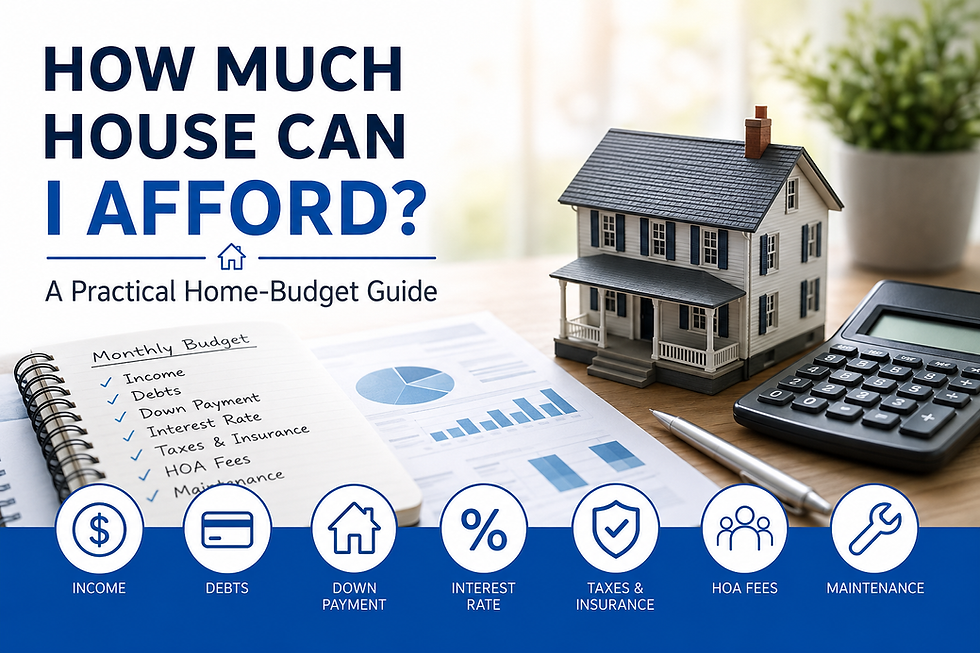
Use the Mortgage Affordability Calculator to estimate how a possible home purchase may fit your income, debts, down payment, taxes, insurance, mortgage insurance, and HOA fees.
Use the Mortgage Amortization Calculator to estimate the payment schedule, total interest, principal reduction, and remaining loan balance over time.
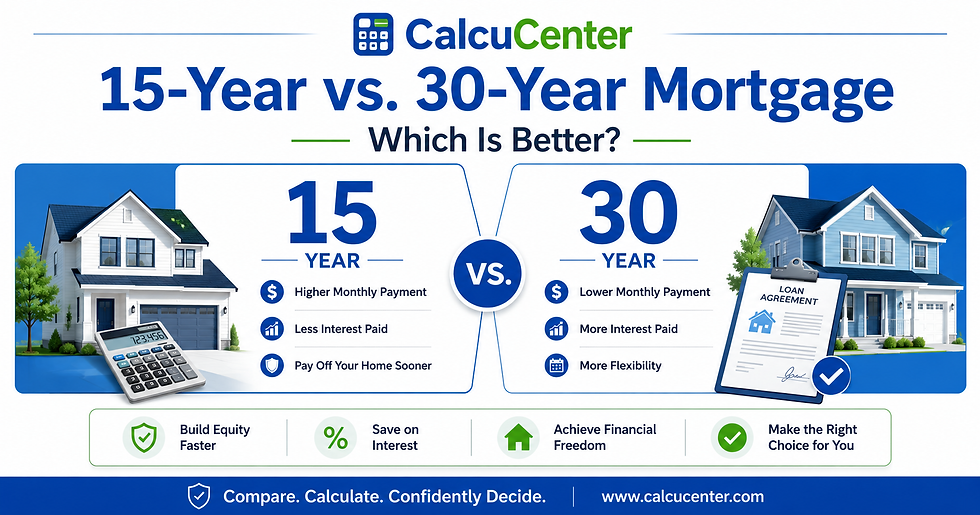
You can also read 15-Year vs. 30-Year Mortgage: Which Is Better? to compare how the mortgage term affects monthly payments, total interest, equity growth, and flexibility.
Run several scenarios rather than relying on one forecast.
Try changing:
Home price
Down payment
Mortgage rate
Loan term
Property taxes
Insurance
HOA fees
Maintenance costs
Expected time in the home
Frequently Asked Questions
Is renting always cheaper than buying?
No. The result depends on rent, home price, mortgage rate, taxes, insurance, maintenance, expected ownership period, and future property values.
Is buying always a better investment?
No. A home may gain or lose value, and ownership includes expenses that reduce the financial return.
Does every mortgage payment build equity?
Only the principal portion directly reduces the mortgage balance. Interest, taxes, insurance, HOA fees, and maintenance do not reduce principal.
How long should I stay before buying makes sense?
There is no universal number. The break-even period depends on purchase costs, selling expenses, rent, ownership costs, and property-value changes.
Should I compare rent with the mortgage payment?
Compare rent with the complete ownership cost, including taxes, insurance, mortgage insurance, HOA fees, maintenance, and repairs.
Is rent wasted money?
No. Rent pays for housing, flexibility, and freedom from many ownership responsibilities.
Can a fixed mortgage payment increase?
The principal-and-interest portion of a fixed-rate mortgage generally remains stable, but taxes, insurance, mortgage insurance, and HOA fees can change.
Does buying protect me from rising housing costs?
It may stabilize principal and interest, but other ownership costs can still increase.
Should I use all my savings for a down payment?
Using too much cash may leave inadequate funds for closing costs, repairs, moving, and emergencies.
Does renting prevent me from building wealth?
Not necessarily. A renter may build wealth through savings, retirement accounts, investments, or paying down debt. The benefit depends on consistent financial habits.
Is a down payment the only upfront buying expense?
No. Buyers may also pay closing costs, inspections, appraisals, prepaid taxes, insurance, moving costs, and immediate repairs.
Should I buy because home prices may increase?
Future appreciation is uncertain. The decision should still work when using conservative assumptions.
Can a calculator tell me whether I should rent or buy?
A calculator can compare assumptions, but it cannot predict future rent, property values, repairs, taxes, or investment returns.
Make the Decision Using Your Complete Financial Picture
Renting may provide lower upfront costs, fewer repair responsibilities, and greater flexibility.
Buying may provide stability, control over the property, principal repayment, and possible equity growth.
The stronger option is the one that fits your:
Budget
Savings
Expected time in the home
Employment stability
Lifestyle
Risk tolerance
Long-term goals
Avoid making the decision based only on rent, the advertised mortgage payment, or the belief that one choice is always financially superior.
Compare the complete costs, test several scenarios, and choose the option you can sustain comfortably.
This article is for general educational and planning purposes. It is not financial, tax, legal, lending, investment, or real-estate advice. Housing costs, mortgage terms, taxes, insurance, tenant rules, and property values vary.